EXHIBITION
-
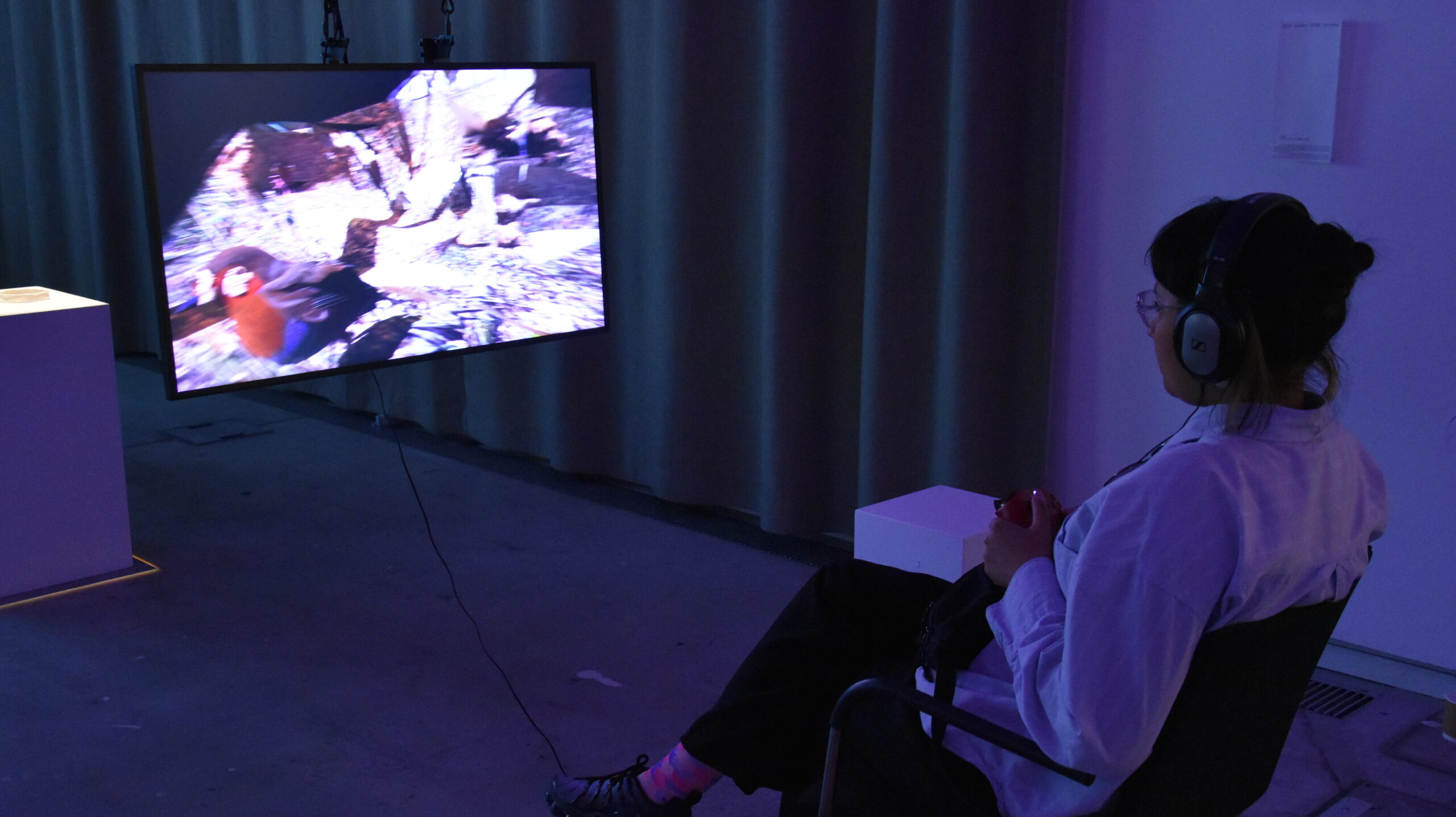
This work imagines a post-human future in which the boundary between body and landscape collapses. Human forms, vegetal structures, and ecological matter merge into hybrid organisms and unstable systems of co-existence.
Nature has long been shaped through processes of extraction, control, and colonization. What forms of life emerge when this relation is reversed? Do we colonize nature, or does nature begin to colonize us?Game design and visual design by Fei Fan · Adapted from the immersive installation “Forest: Gaze” · 3D scans by Crescencia Jiménez and Fei Fan · Sound by Virginia Guzmán Ellacuría and Valentina Zatevalneva · Mentored by Stella Speziali
Post-human · hybrid bodies · ecological entanglement · symbiosis · reimagined nature
-
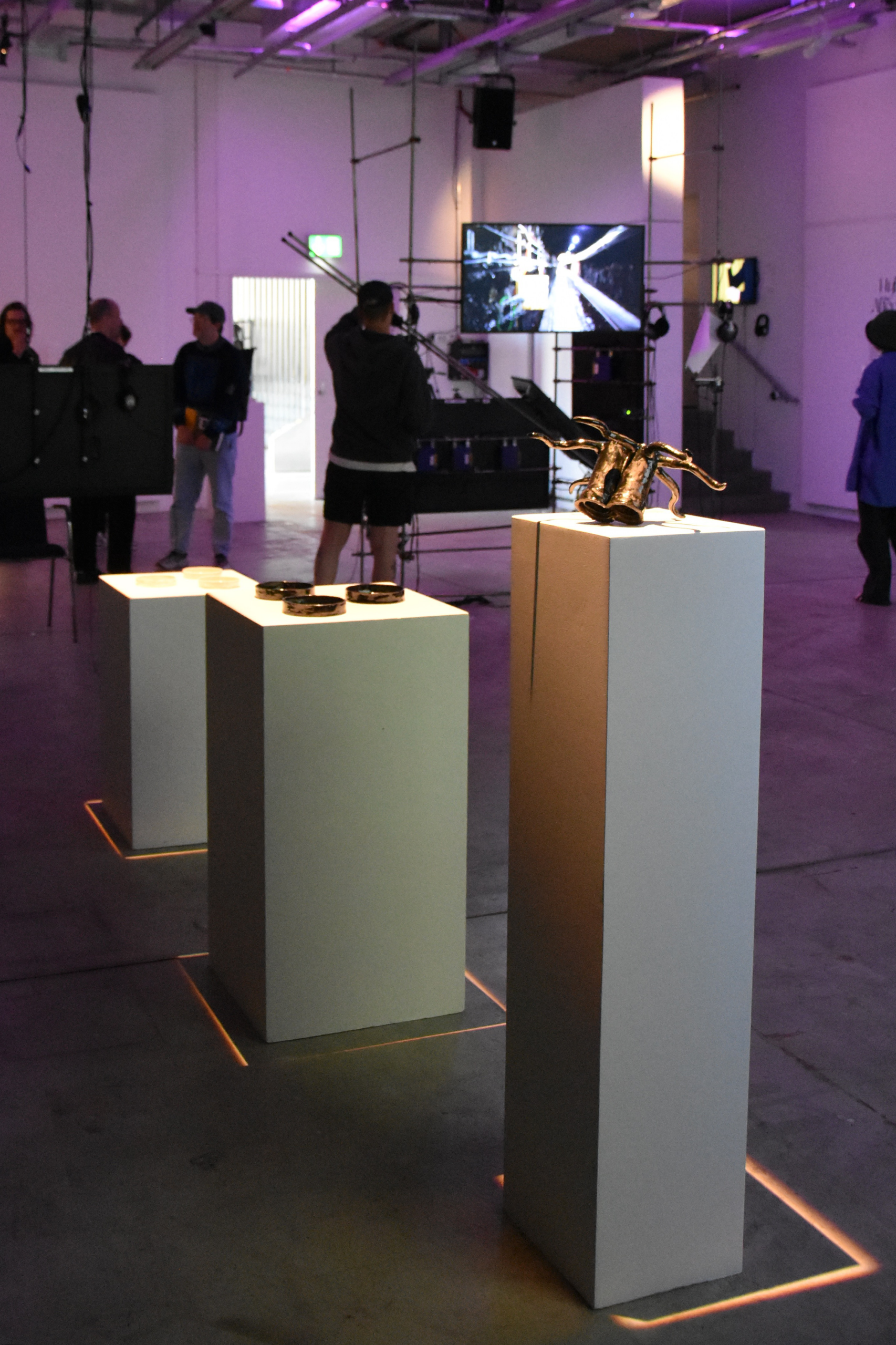
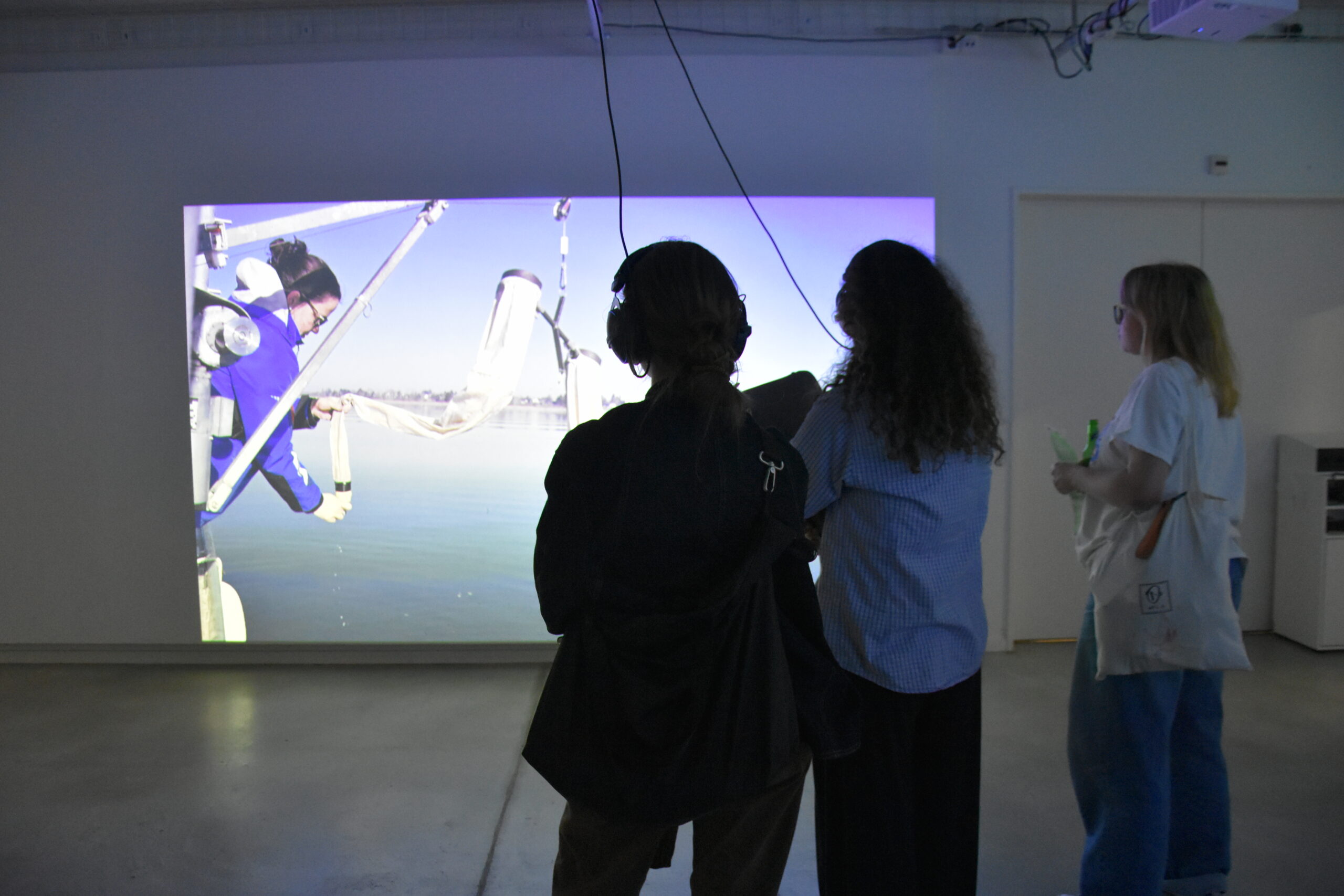
In a set-up inspired by a scientific laboratory featuring a microscope and petri dishes, the chaos and mystery of planktonic life is explored in a science-fictional way, asking the question of relationality between plankton and humans. By changing size, scale and direction, and fusing bodies normally separated, this constellation searches for a human perspective that is looking up to, leaning on, and being held by the normally almost invisible entities living in the depths of lakes.
How can the knowledge of plankton being involved in CO₂/oxygen cycles, water quality, and food webs be transferred into an emotional and embodied form of knowledge about sustaining each other, breathing together, and being carried and contained by the same waters?Plankton · science-fiction · chaos · affection & intimacy · drifting · shifting scales · hybrid bodies · other intelligence · re-enchantment
-
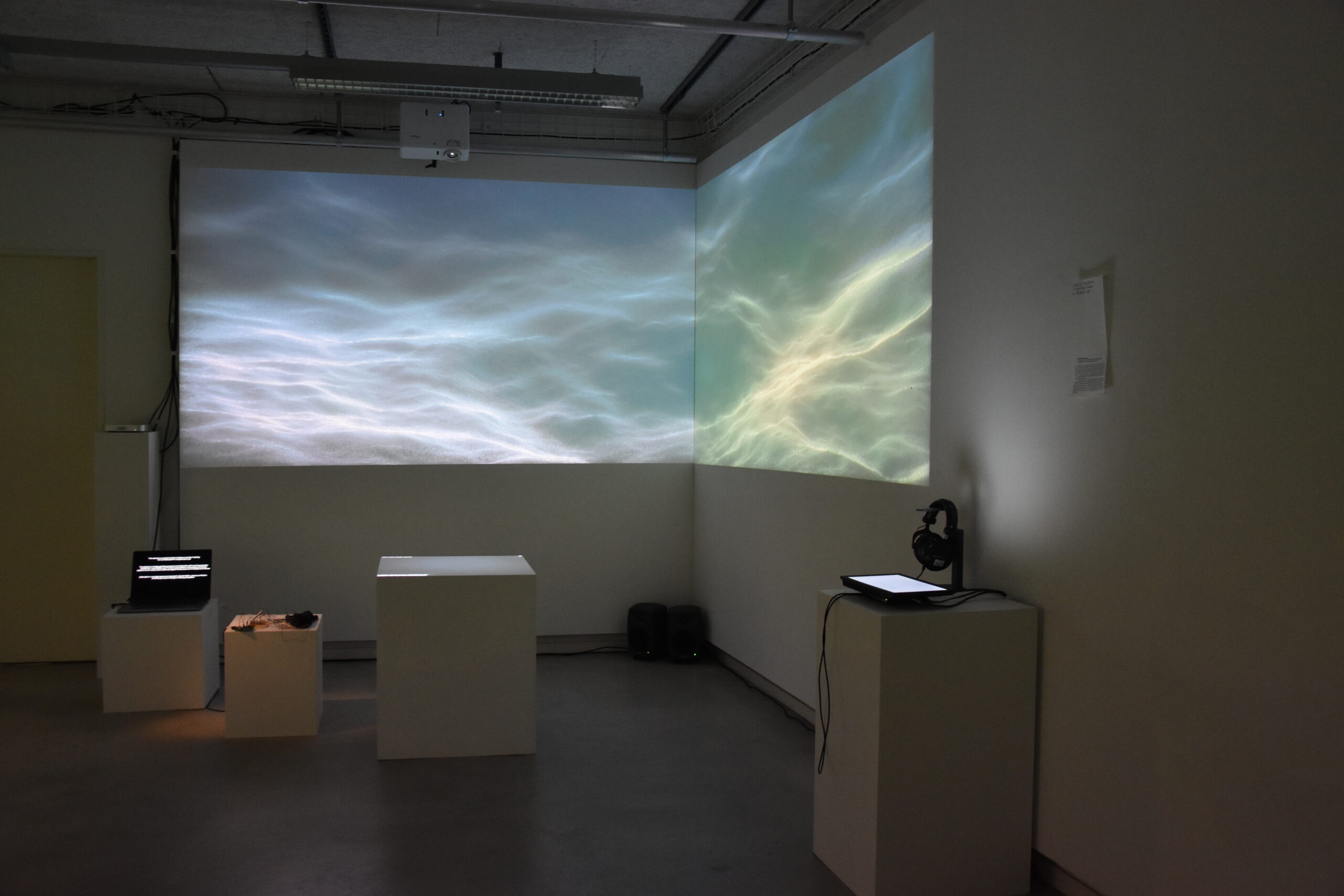
Planktonic microorganisms constitute a fundamental component for the health and stability of the global ecosystem, both aquatic and terrestrial. Despite their crucial ecological role, public knowledge and awareness about them remain limited, thereby hindering environmental conservation efforts.
The project involves the development of multiple stations designed to foster empathic engagement, establishing a sense of connection and proximity between human beings and planktonic microorganisms. Through the guidance and passion of two young scientists and a real-time connection with the Greifensee, visitors are stimulated both on an informational and a sensory level, allowing them to perceive, even if only partially, what it means to “be plankton”.In collaboration with Marta Reyes and Stefanie Eyring (Eawag – Aquascope)
Embodiment · beyond anthropocentrism · planktonic life
-
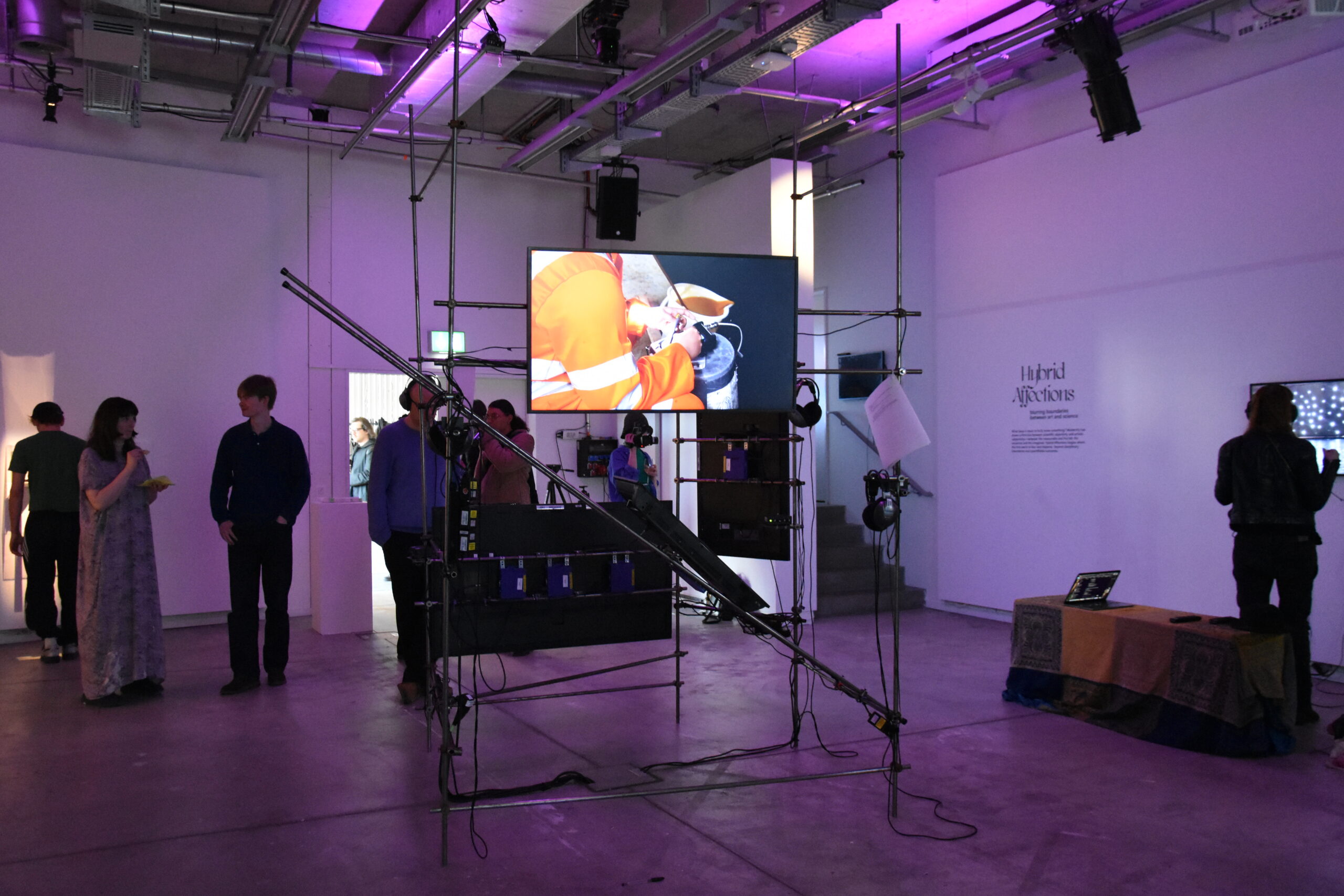
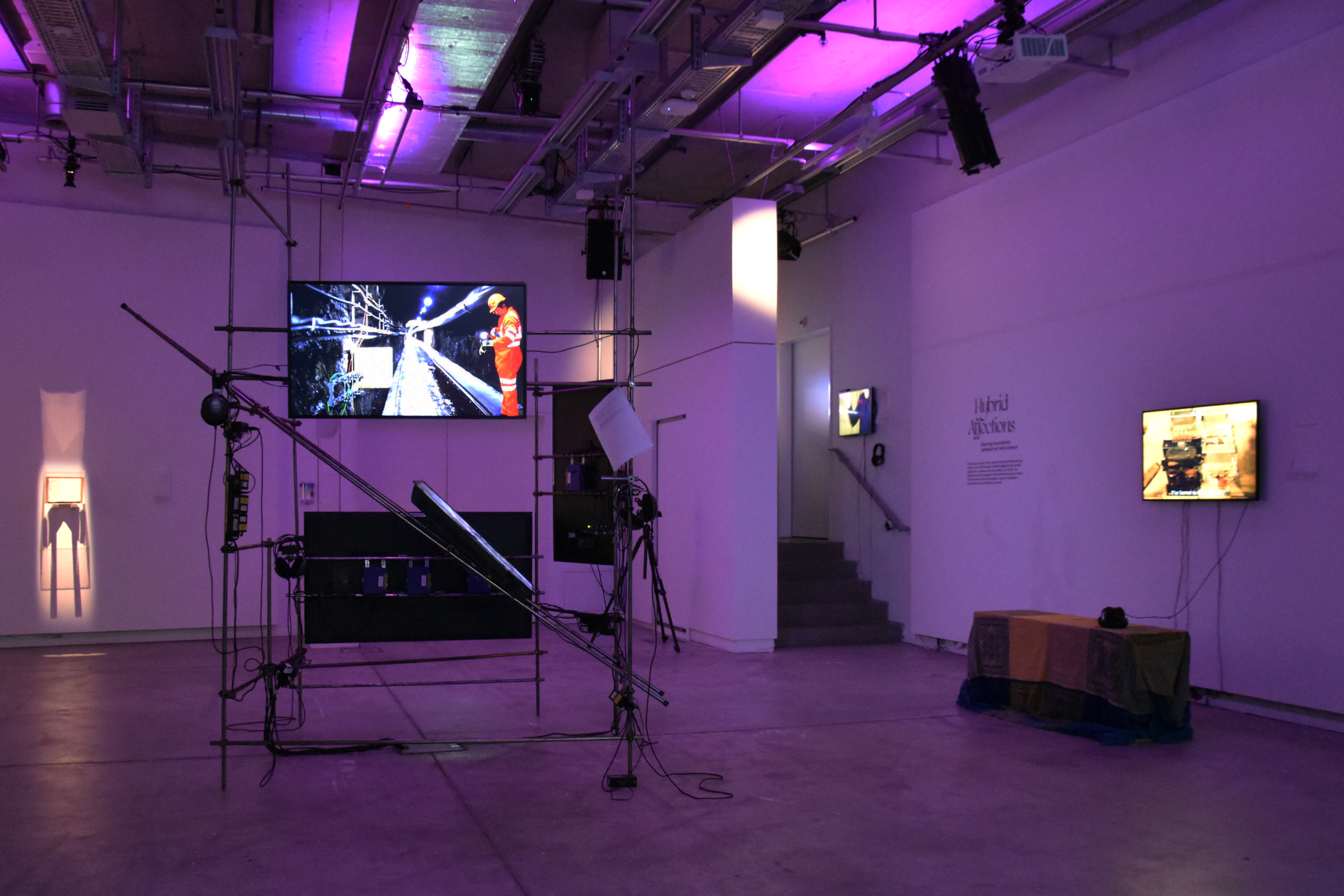
Underground tunnels and boreholes are not merely geographic voids; they function as a question mark inserted into the granite body of the Alps. Several kilometers beneath the surface, natural light is replaced by darkness. The internal temperature remains constant at 21.7°C, detached from the seasonal rhythms of the world above.
On the surface, glaciers sculpt mountains and fracture bedrock, acting as a force of solid mass; as conditions shift, they transform into flowing water, continuing their movement in another state. This project explores Time, Water, and Subsurface Dwellers — working with the ETH Bedretto Underground Laboratory and the DELOS (Deep Life Observatory) team, bringing together scientific data, field photography, and cross-cultural inquiry.Underground · water · fieldwork · light · laboratory
-
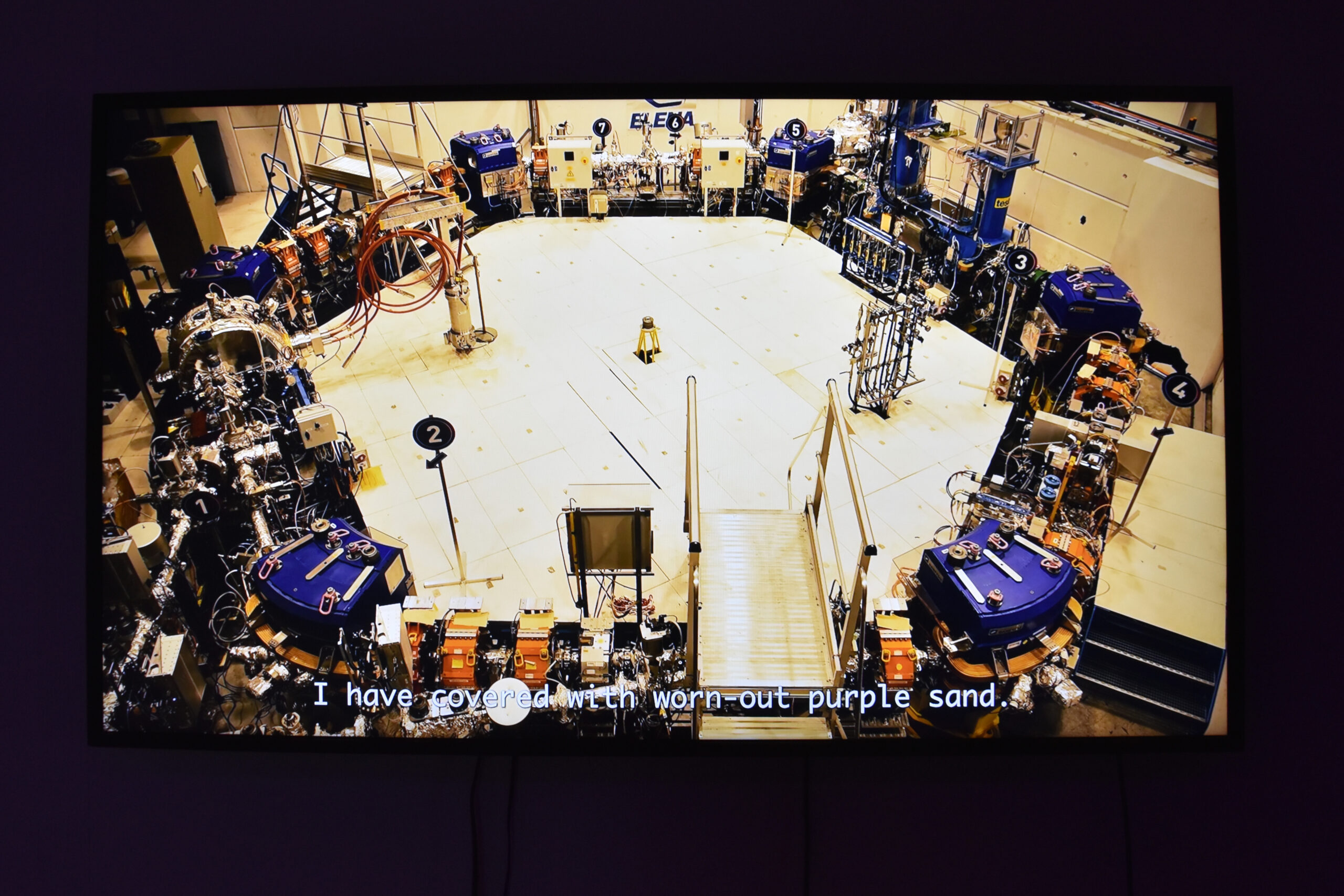
An apocalyptic poetry film assembled from fragments: a visit to CERN, botanical elements, trash, cables, blinking systems, AI hallucinations, atoms, and visual metaphors that seem to explain, while doing the opposite. It is a film about the aesthetics of knowledge, about cosmic noise and irreality, and about the way complex scientific realities are translated into images and ultimately belief. The less comprehensible the science becomes, the more seductive its visuals appear.
Poetry · particle physics · cosmology · experimental cinema · techno-mythology · death · epistemology of science · performance · machinima · AI hallucinations
-
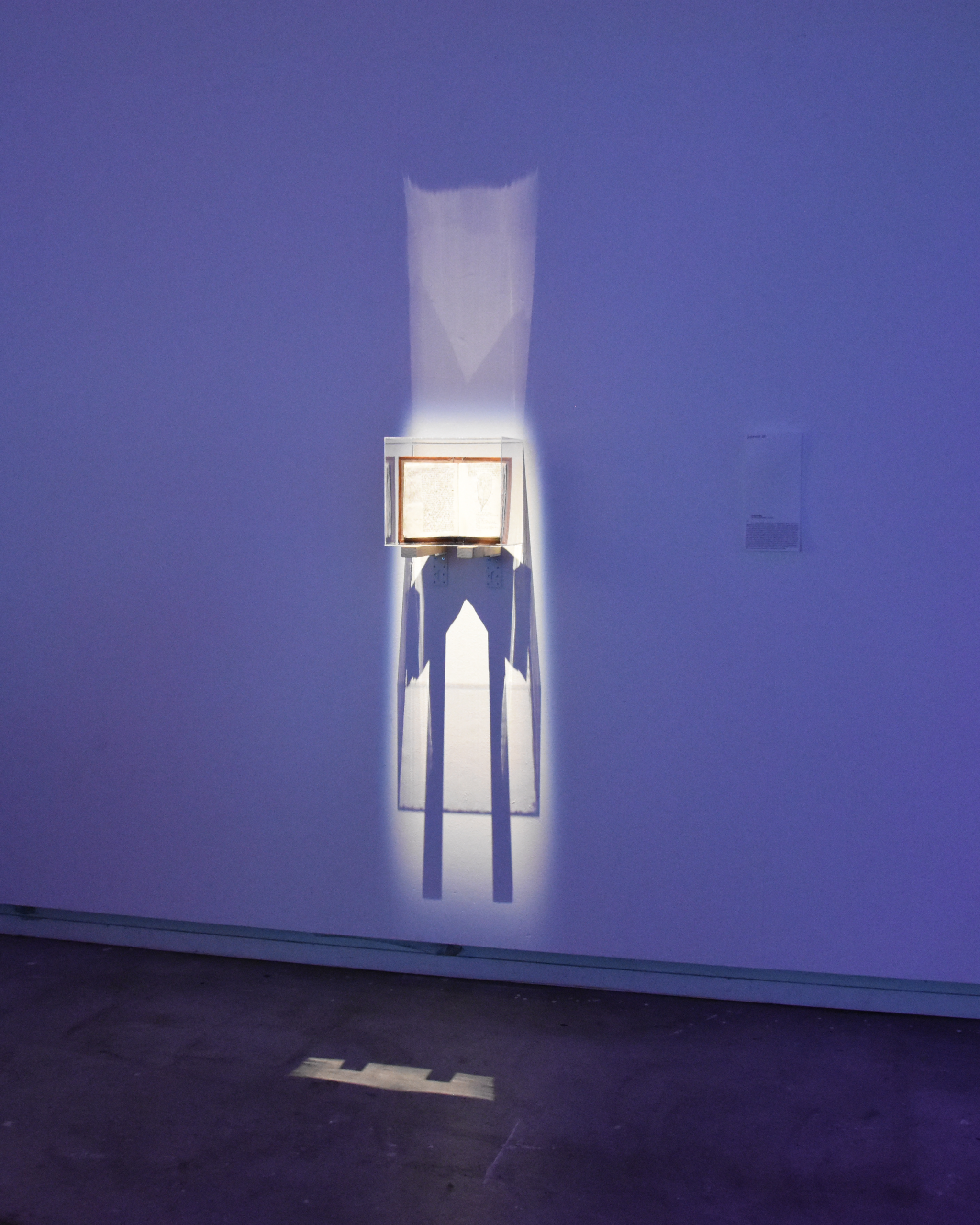
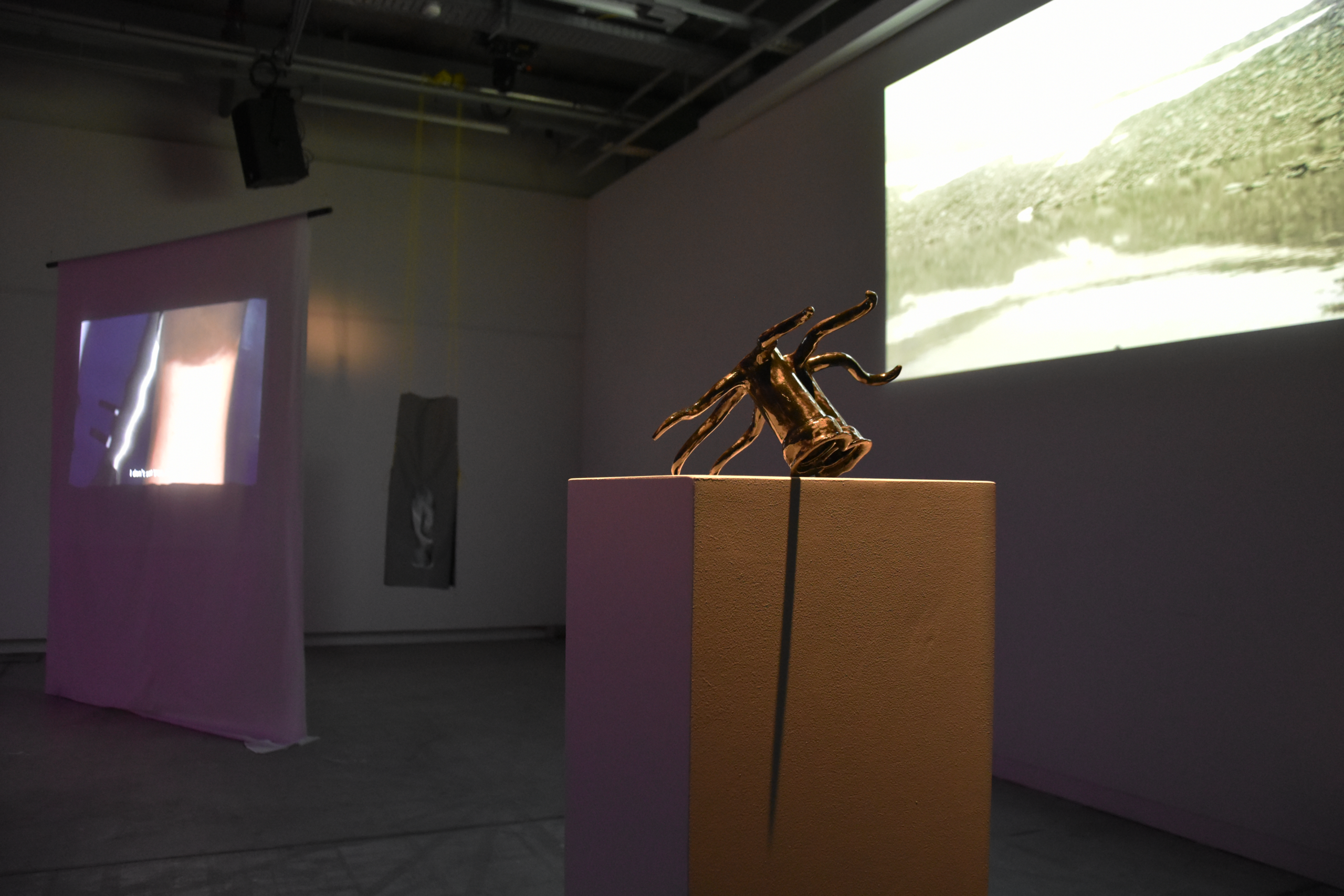
This work revisits Journal III of Humboldt’s South American expedition, focusing on the episode in which local fishermen drive horses into the water to provoke electric eels. That encounter marks not only a moment of empirical observation but the first documented instance of electroporation: the electric pulses of the eels permeate cellular boundaries, allowing genetic material to traverse between species.
Within the charged waters of the Amazon — dense with planktonic life — the DNA of the horse fuses with microscopic organisms, giving rise to a hybrid entity: the plankton horse. Emerging from the convergence of scientific record and speculative transformation, this figure inhabits the same threshold that Humboldt once approached, where the limits of knowledge dissolve into the generative forces of the environment.Magic realism · Electric Eel · science and fiction · postcolonial re-inscription · horse plankton
-
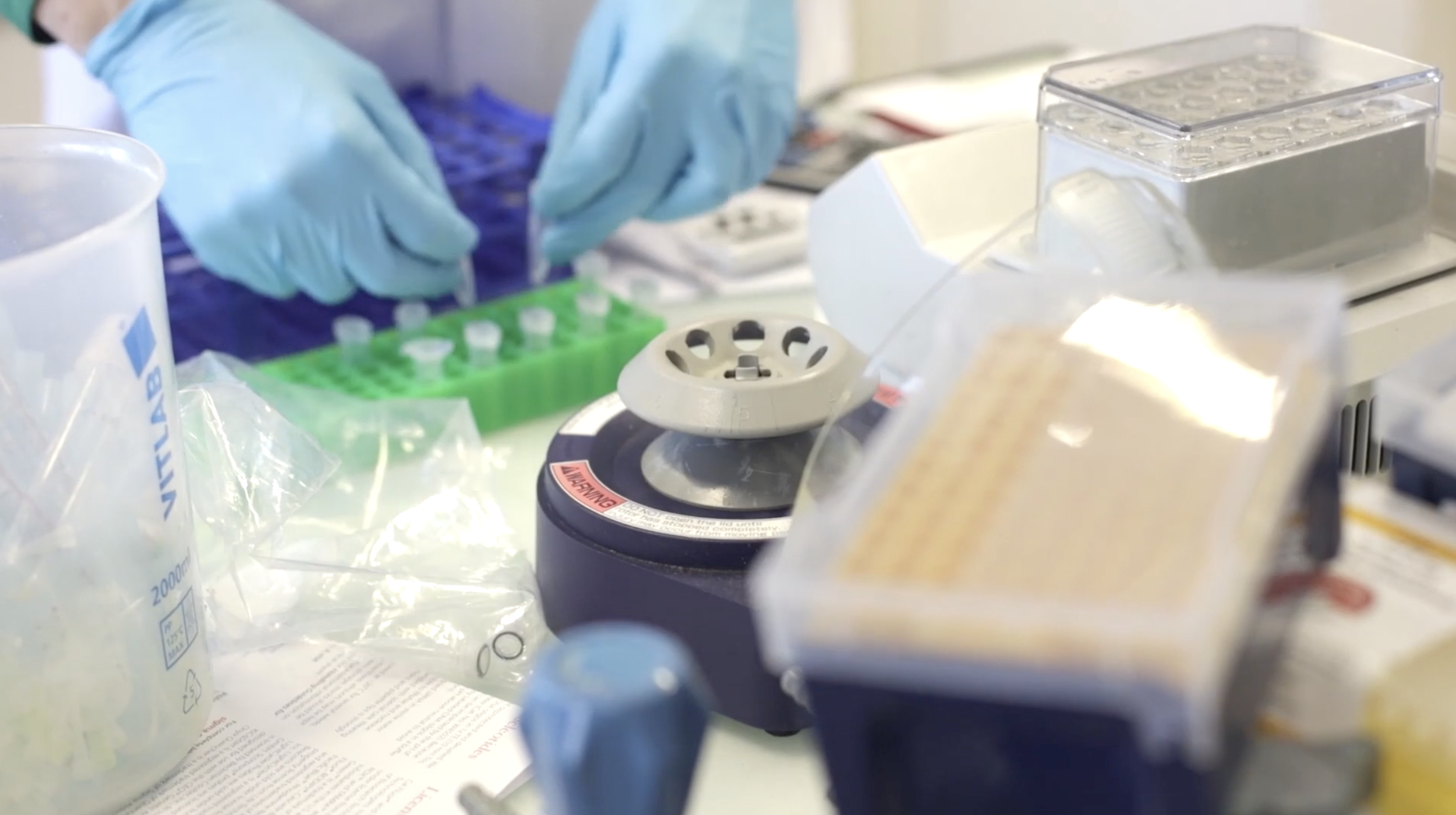
The fruition of a collaboration between scientists Raffaele Altamura and Bartolomeo Angelici with Esther Mathis and Gabriel Flückiger. This collaboration was based on extensive discussions and exchanges through visiting each other’s places of work: the science labs and the artists’ studios. These encounters provided an approximation, exchange of knowledge and a critical interrogation of one another, serving as the basis for the cinematic and experimental portrait of the scientists. The focus within the frame of the video is placed on gestures and manual procedures in the laboratory and their anonymous and aesthetic dimensions.
Sound: Fabian Gutscher · Realized as part of ‘Art of Molecule’ at SNF-NCCR ‘Molecular Systems Engineering’ (ETH Zürich, University of Basel)
Gestures · laboratory · artist studio · encounters
-
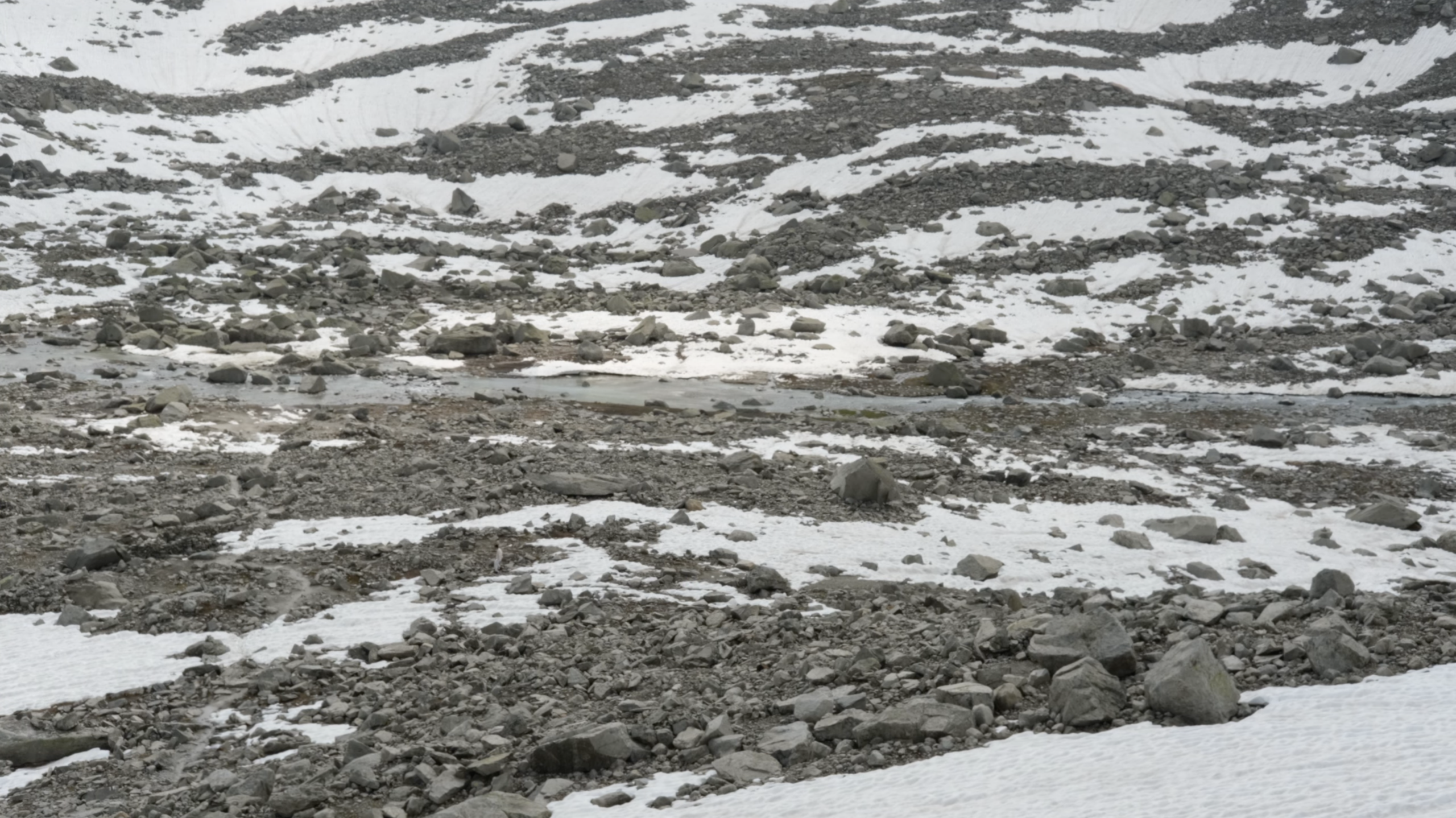
This work explores the concept of becoming, and transforming — which can be seen or unseen. It centres on non-human beings that we normally ignore and would not even notice. The work originates from the diverse waterways within the ecosystem surrounding Furka Pass, Switzerland, then turns into a very personal work.
There are billions of organisms scattered throughout the field, yet only scientists, biologists or those specialists who typically seek them out through the lens of a microscope notice them. Organisms are identified when they are observed; they disappear or never exist in a meaningful way if they are not seen and acknowledged. In this video work, the artist becomes one of the billions, immersing herself in the field, in different landscapes, one of the organisms.Invasive species · disappearing · microscope · non-human
-
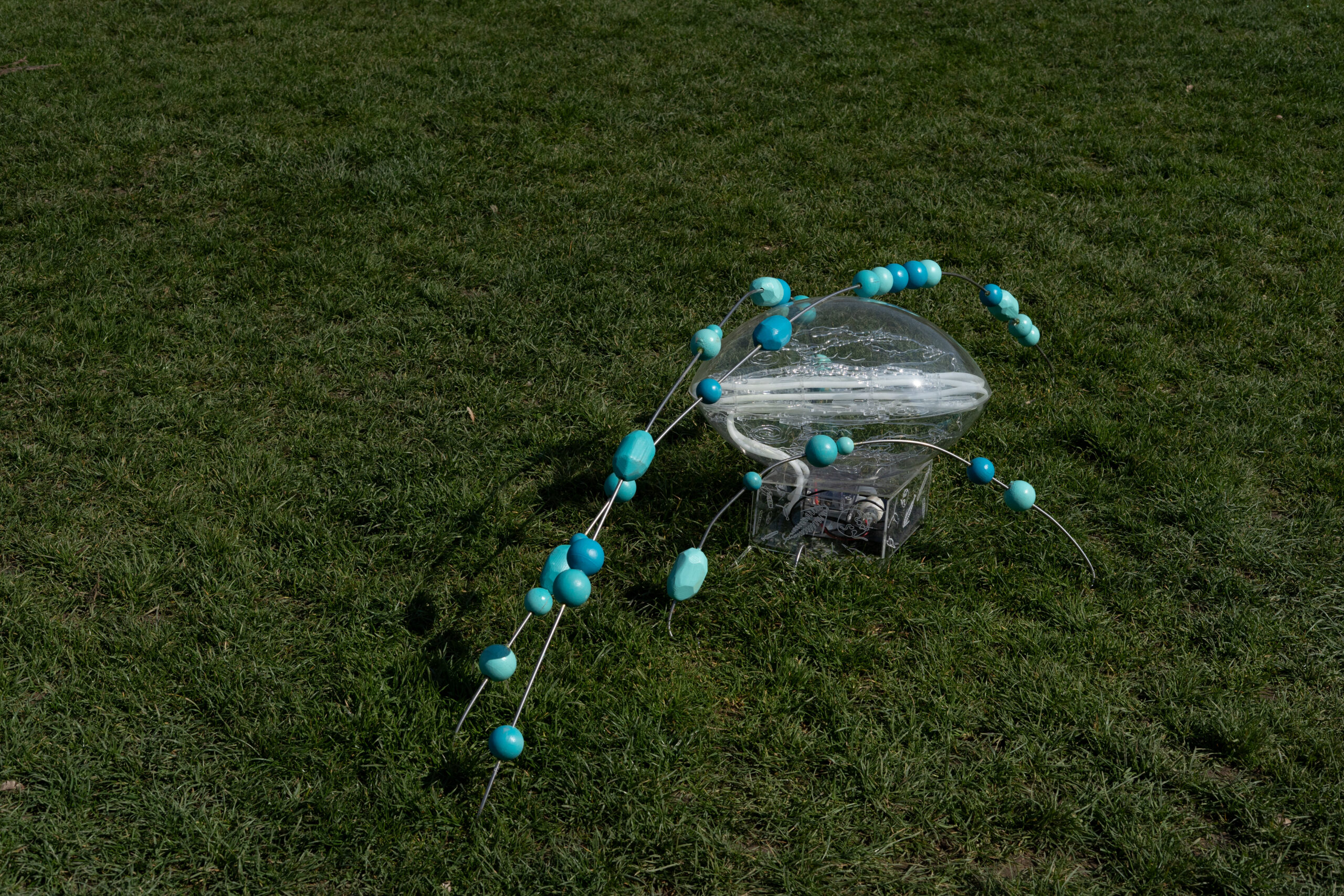
“We clamor for the right to opacity for everyone.” — Édouard Glissant, Poetics of Relation, 1990
I love the moments when I ask, why is this creature like this? and no one — not experts, not AI — can give me a definite answer. Because such an answer would mean analysis, dissection, the presumption that the organism can be fully understood. Whether it is because plankton are too small to study in detail, or people don’t see the value of research into it, or because current technology is insufficient, or because some mysteries may remain forever unknowable.
These nearly transparent beings still preserve their opacity. I can see them: I can see their organs, their eating, digestion, reproduction, excretion. I could watch their entire life. And yet I cannot see them, they remain inaccessible.Transparency · circularity · plankton · water · drifting
-
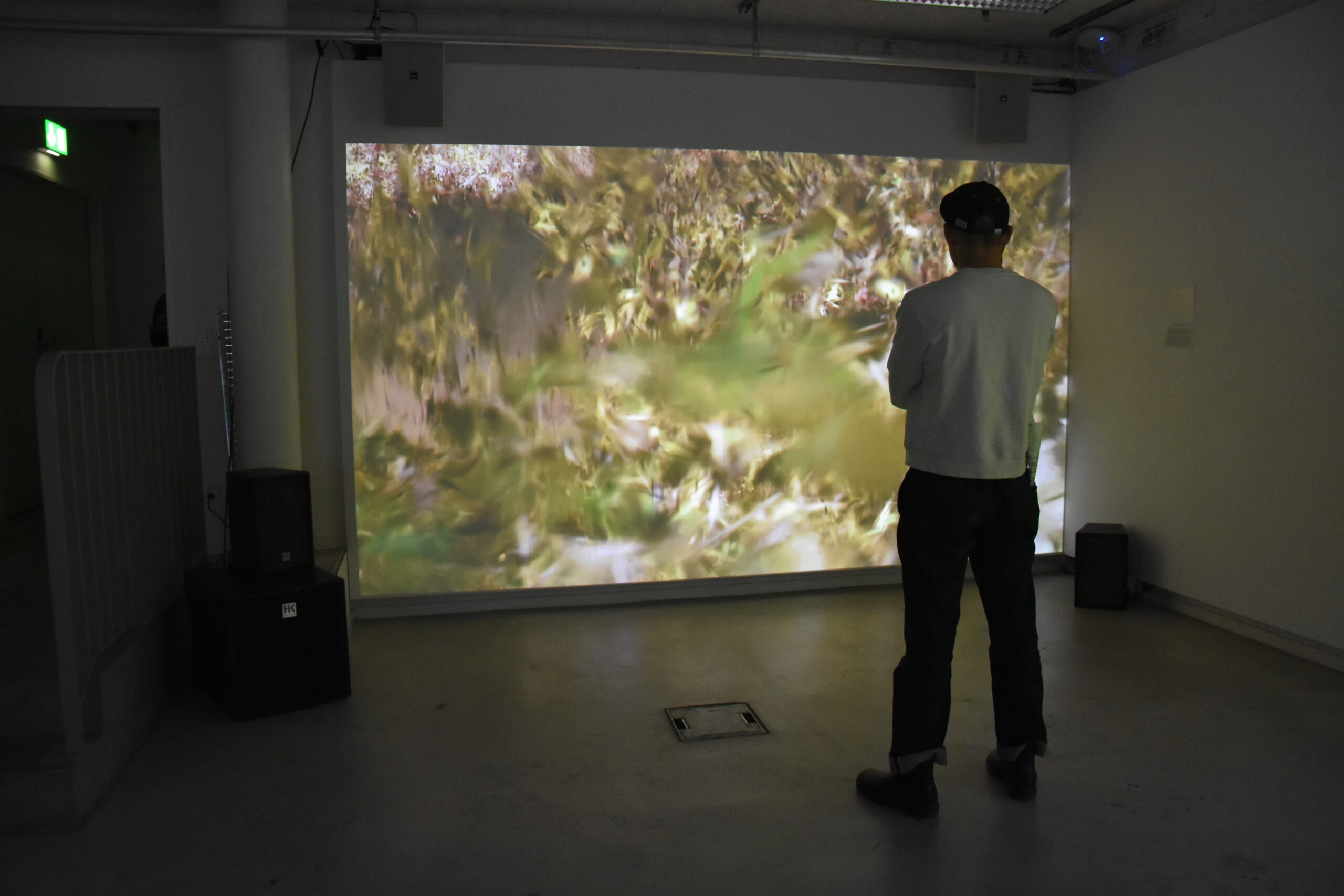
How do you conserve something that is never still? The work is based on an interest in exploring the implications of conservation, specifically of peatlands. The observation of “an entity that has been forming and transforming, degrading matter and storing molecules from ancient life, still in movement” resulted in a speculative asset library of 3D models of plants from the Salwideli moor, 3D scans and visualisations of the surroundings, and spherical field audio recordings of the moor.
The collected, produced and composed material comes together in a film, presented as an audio-visual installation and complemented by a text that linguistically portrays the moor. The work synthesises the processes and voices in the moor and reproduces the space in a new location intended for close observation.Realized in cooperation with the Master in Transdisciplinary Studies and the TdLab of ETH Zurich’s Department of Environmental Systems Science
Conservation · peatlands · observation · asset library
-
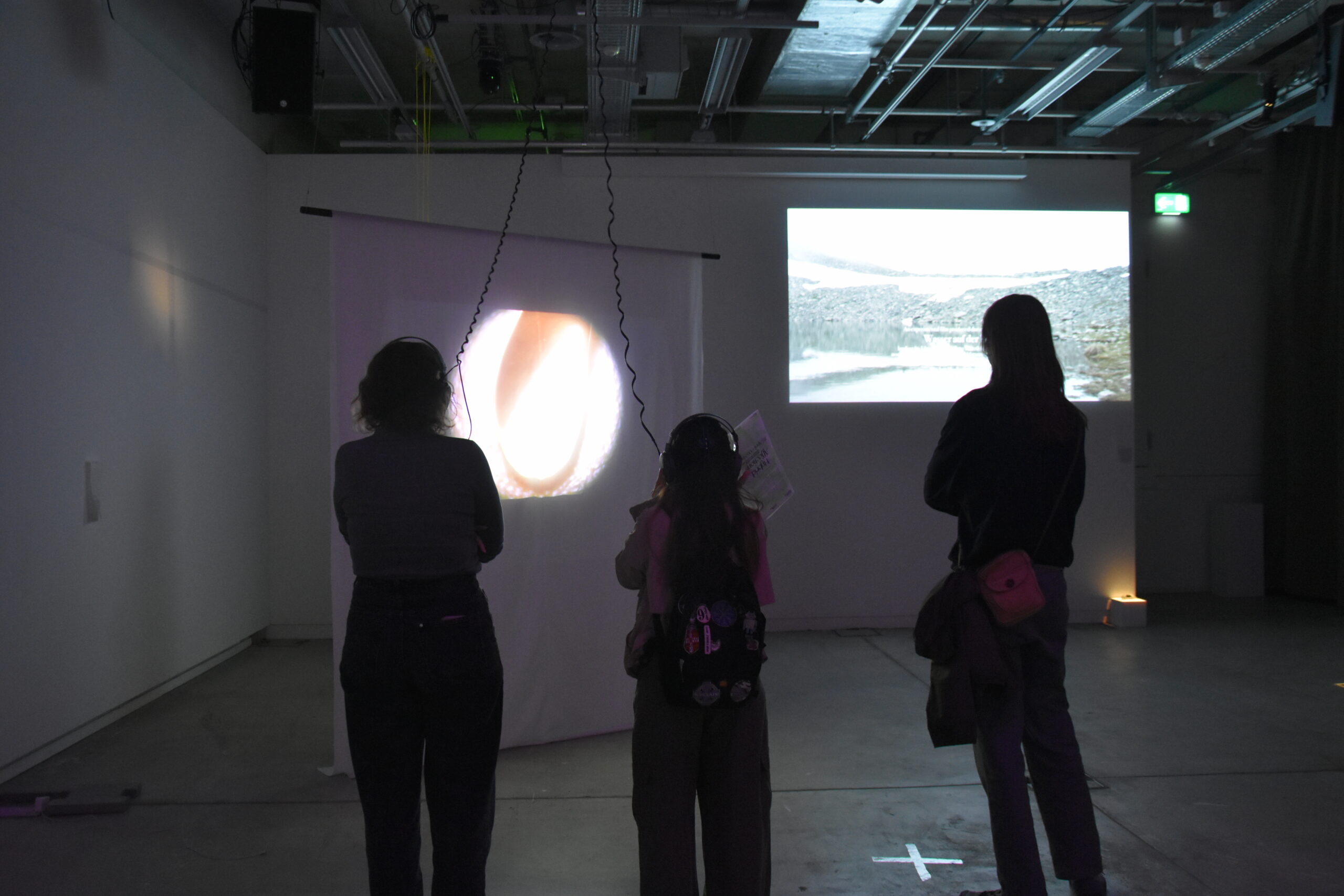
There are elements in nature that, although we cannot see them, we can feel: temperatures, smells, breezes, humidity, and even microscopic phenomena that interact with our bodies without us being fully aware of it. This work explores the idea of “soft touching” through the direct contact between the human body and plankton communities in Greifensee.
The artist enters the lake wearing a garment that incorporates a plankton filtering mesh — a material commonly used for collecting samples for scientific study. The outline of this filter, attached to the garment, reproduces the shape of Greifensee. After leaving the water, a period of waiting begins in which the body remains wet until the water evaporates naturally, suggesting that plankton may remain on the skin for a short period of time.The voices of freshwater ecologists Marta Reyes and Stefanie Eyring accompany this drift.
-
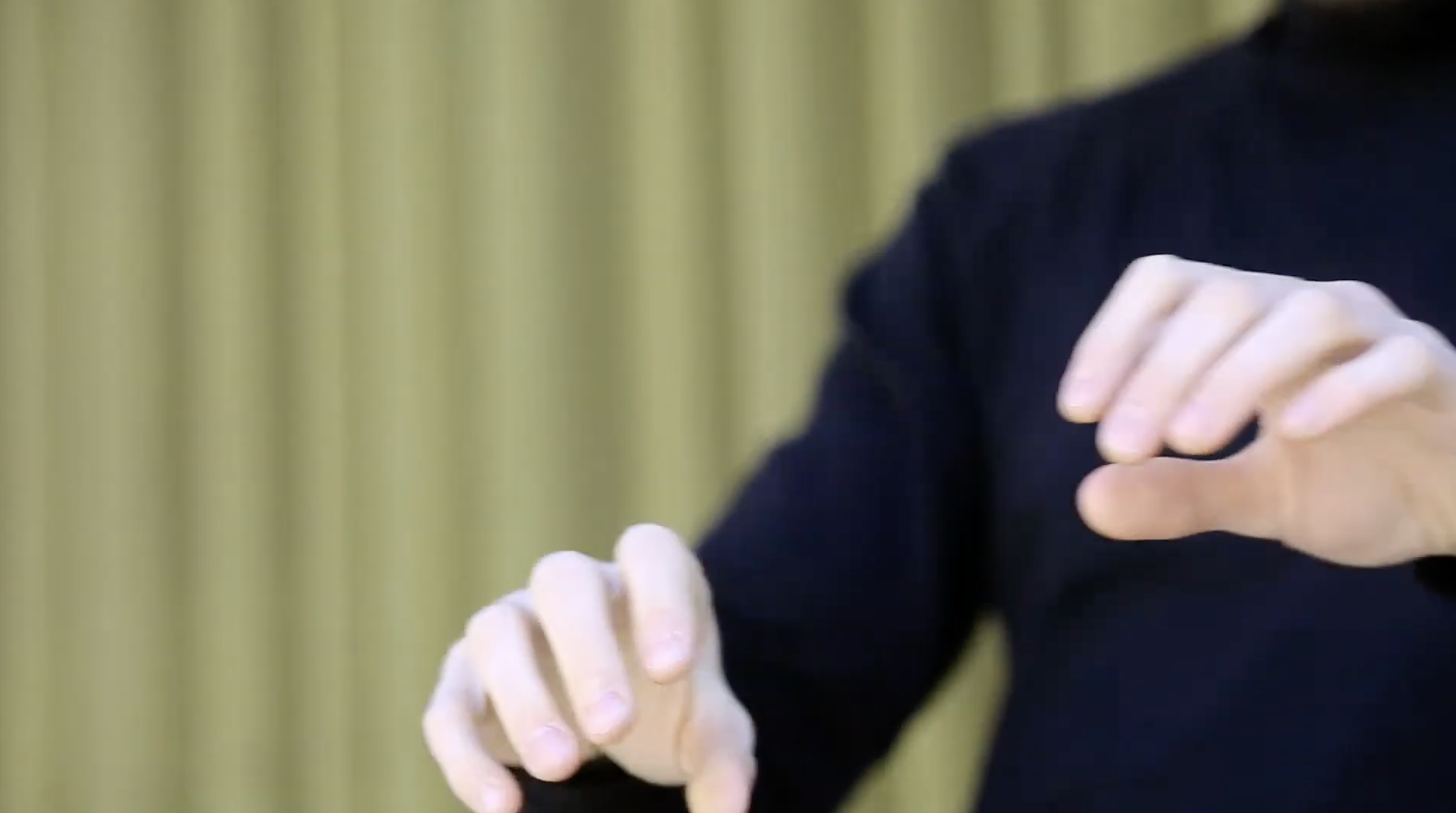
‘String of gestures’ are movements stemming from laboratory daily life of molecular biologist Raffaele Altamura. During the video the repetitious series of movement is more and more freed from its original context and logics of research; they manifest through precise editing a poetic, dancing quality. Science as a string of routine and gestures, but also as a musical experiment, a string of movement.
Sound: Fabian Gutscher · Realized as part of ‘Art of Molecule’ at SNF-NCCR ‘Molecular Systems Engineering’ (ETH Zürich, University of Basel)
Gestures · routine · movement · laboratory
-
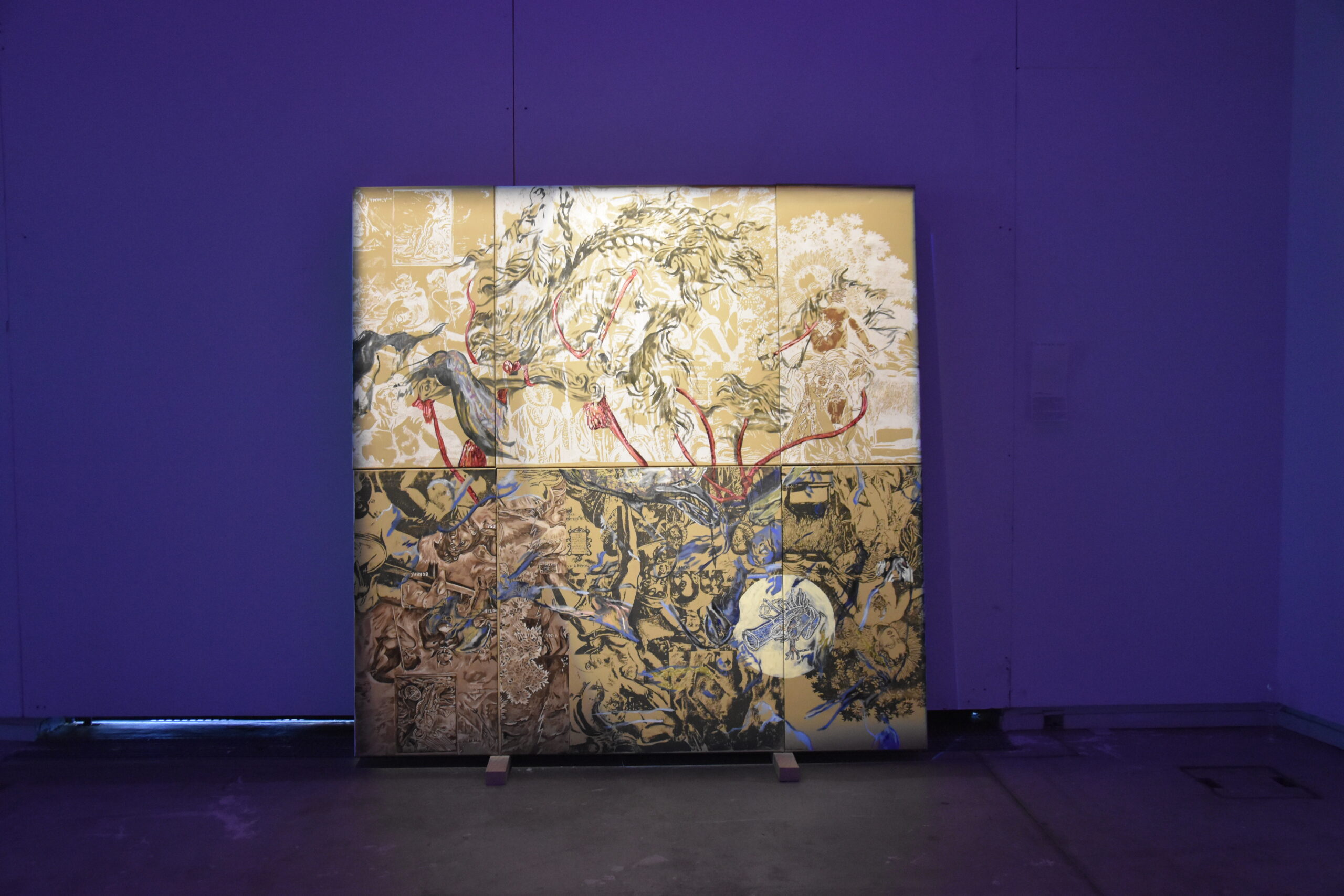
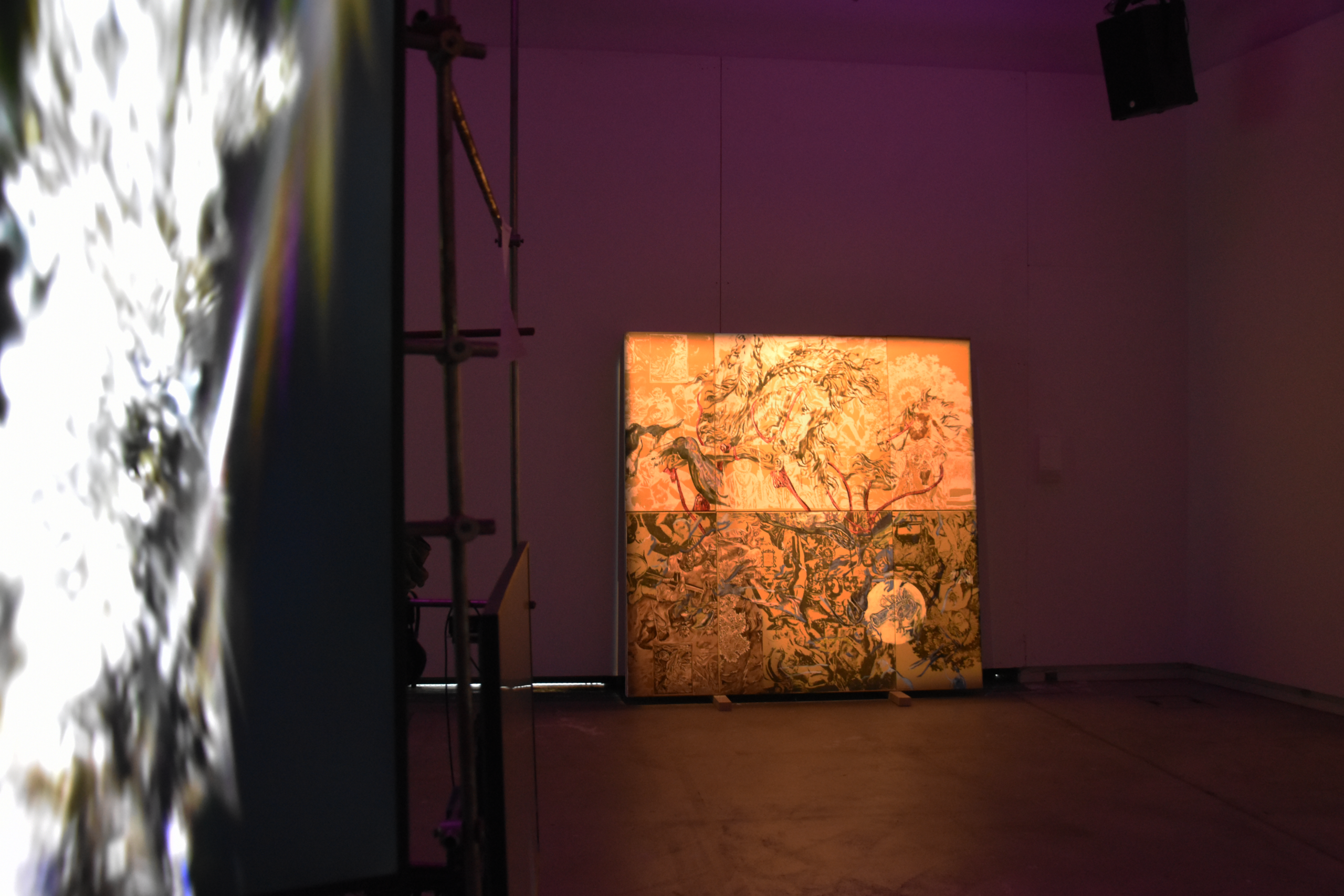
This painting draws from Alexander von Humboldt’s writings during his expeditions in the South American Amazon, interpreted through the lens of magical realism. His fascination with the continent led to discoveries that often blurred the boundaries between scientific observation and imagination.
A key example is his study of the electric eel, whose early descriptions were once dismissed as fantastical. His encounter with the species reads like magical realism — revealing how the Latin American environment fosters extraordinary experiences. Only recently did Kenneth Catania confirm the accuracy of these accounts, opening new ways of rethinking history through both Western and Latin American perspectives.Magic realism · Electric Eel · science and fiction · postcolonial re-inscription · horse plankton
-
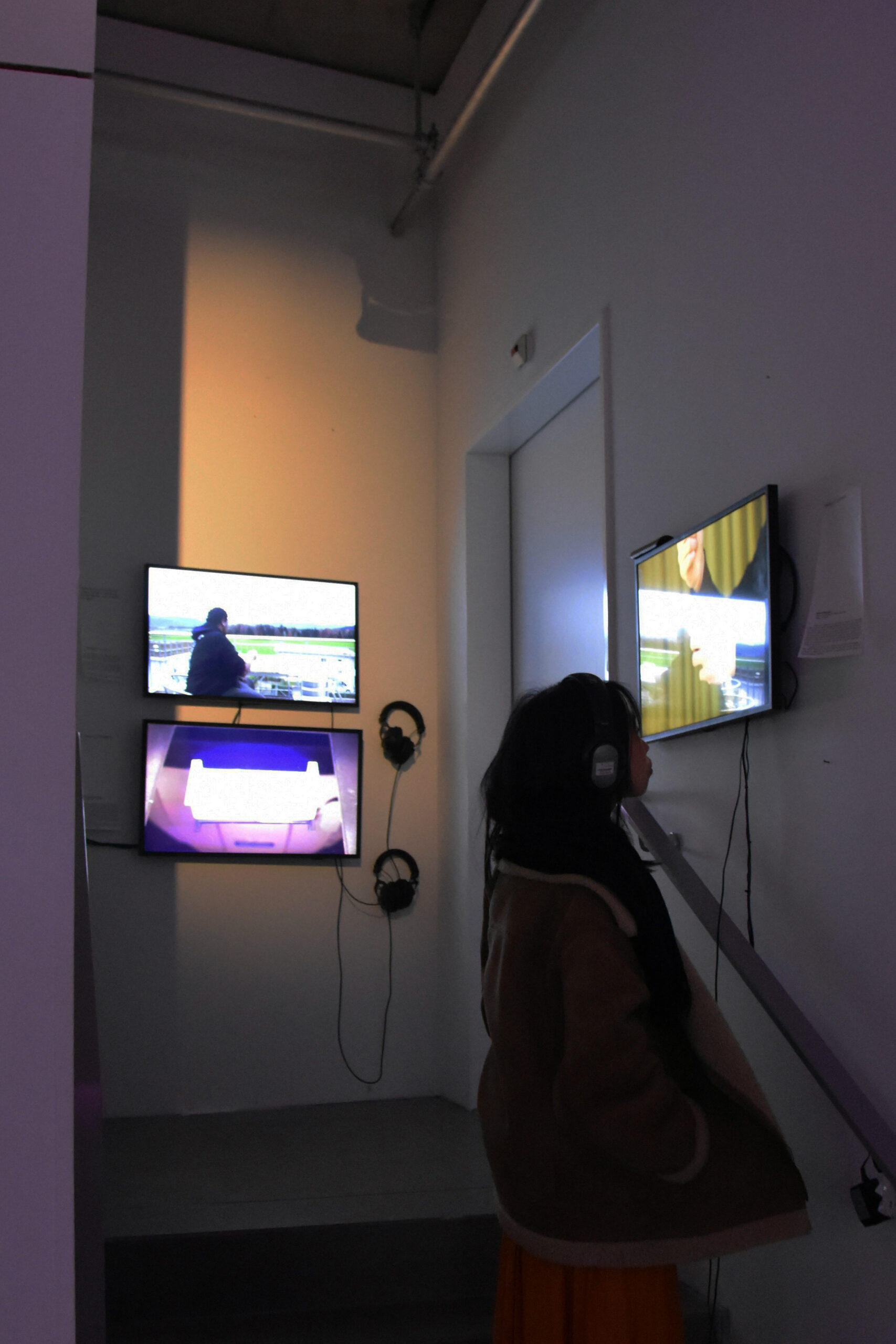
In the everyday life of care and health professionals, gestures of professional and private care practices overlap, interfere and inscribe themselves deeply into the bodies. The embodied knowledge condensed from experience has so far remained underexposed in the scientific debate. (How) can this knowledge be made tangible?
‘zwischen-menschen-räume’ follows the manual handling of bodies and objects in professional and private life of health-care professionals. In conversations and with a camera, the work questions the connections, tensions and limits of physical and emotional touch. The spaces surrounding the protagonists are observed in their identity-building dimensions, created and experienced by intimacy and distance.Realized in cooperation between the mLAB of the Institute of Geography, University of Berne, and the Master in Transdisciplinary Studies.
Gestures · intimacy · care · touch